Corporate events fail differently from weddings. A wedding that runs thirty minutes late is forgiven. A product launch where the LED wall isn’t calibrated when the media walk in is a business problem.
Gurgaon is one of India’s densest corporate belts — Cyber City, Udyog Vihar, Golf Course Road, Sohna Road — and corporate events here run in hotels, convention centres, banquet halls and outdoor grounds. What separates a smooth event from a stressful one is rarely the design. It’s the setup.
Here’s what corporate event setup actually involves, and what to check before signing off.
Corporate décor is not wedding décor
The most common mistake is applying wedding thinking to a corporate stage. Corporate setup is about clarity and brand consistency, not abundance:
- Clean, minimal stage design that doesn’t compete with the speaker
- Branded backdrop panels with correct colours and logo placement
- LED screen framing that integrates into the stage rather than sitting awkwardly beside it
- Structured, even lighting — faces lit properly for cameras and livestream
- Entry branding, standees and registration desk styling
- Clear sightlines from every seat
Heavy floral work and dramatic draping usually make a corporate stage look less professional, not more.
The four event formats and what each demands
Conferences and seminars. Stage, podium, and screen positioning driven by sightlines. Every seat needs an unobstructed view. Ceiling height matters more than people expect — it dictates how high the screen can sit and therefore who can see it from the back rows.
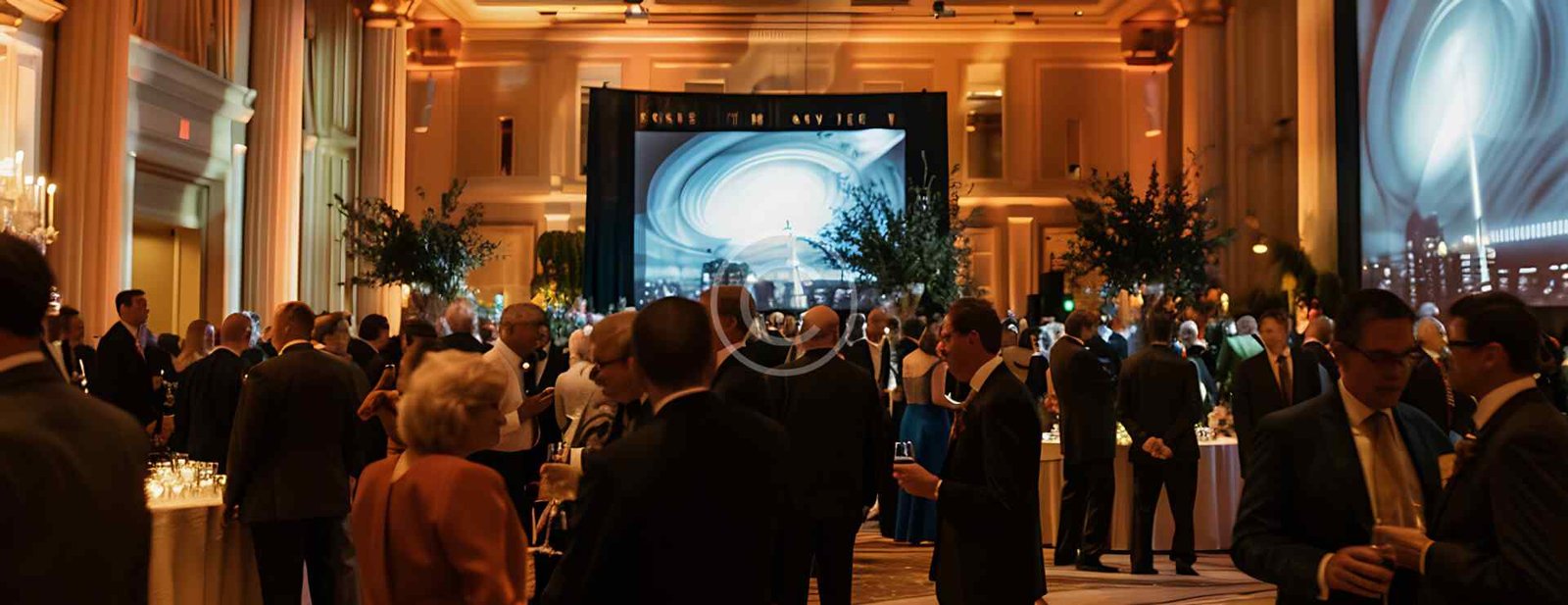
Product launches. The highest-stakes format. Branded backdrop, LED wall, media wall for photographs, focused lighting on the product, and a clean reveal area. Media coverage means the setup gets photographed from every angle, so cable management and finish quality matter far more than usual.
Annual days and award ceremonies. Longer run-times, more people on stage, trophy or award display setup, and lighting that works for both formal presentation and celebration.
Exhibitions and trade shows. Stall fabrication, branding panels, and visitor flow. Modular structures that go up fast and read clearly from a distance.
The technical checks that prevent event-day failures
This is the part that separates experienced setup teams from cheap quotes. Before the build:
| Check | Why it matters |
|---|---|
| Electrical load | LED walls, lighting and sound draw serious power. Confirm the venue’s available load and whether backup exists. |
| Ceiling height & rigging points | Determines screen size, truss placement and what can be hung safely. |
| Truss load rating | Overhead rigging carries real weight. It must be rated, not improvised. |
| Sightlines | Check from the back and side seats, not just the centre. |
| Setup window | Many Gurgaon venues allow limited hours. This constrains everything. |
| Technical rehearsal | Sound, lighting and screen trials before doors open — the single highest-value hour of the day. |
| Cable management | Visible cabling in launch photography is avoidable and looks amateur. |
If a setup partner doesn’t ask about power load and rigging points before quoting, that’s a warning sign.
Outdoor corporate events need real structures
Not every corporate event happens in a hotel ballroom. Dealer meets, activations and large launches increasingly run on open grounds — which means the structure itself becomes the venue.
For these, you need clear-span German hangars (no pillars blocking the stage), truss stages, branded entry gates, and weather cover appropriate to the season. Outdoor corporate setups also need power planning and levelled flooring, both of which take longer than teams expect.
Build the timeline backwards
The most reliable corporate setups are scheduled backwards from the doors-open time, not forwards from when the crew arrives:
- Site recce — measure, check power, confirm access and setup window
- Structure and staging — the longest phase
- LED, lighting and sound install
- Branding and décor finish
- Technical rehearsal — with real content, not a test pattern
- Cleaning and final walkthrough — before the first guest, not during
Skipping step 5 is the most common cause of visible problems on the day.